

With any new venture, it’s important to get organised before diving in. But when it comes to starting a service-based business, there are a few things in particular you have to consider. From legal protection to time management, putting processes in place right away can make a massive difference.
I remember so clearly what those early days were like! So fourteen-plus years on, with a lot of knowledge under my belt, I thought I’d share my tips. Here’s what I recommend doing to succeed when starting a service-based business.
The legal side

First things first – get your legal ducks in a row! This is a crucial part of any business setup, so don’t be tempted to rush in without sorting the following.
First, you need to register with HMRC, either as a sole trader or a limited company. Take the time to do your homework here and figure out which option is best for the business you are running. This page on the gov.uk website breaks down your options, with further links explaining each in more detail.
Next, set up a business bank account. Firstly, it keeps everything tidy, with no personal transactions mixed in if you ever need to submit accounts to HMRC. But also, business accounts can be set up for trading internationally if that’s something you’re going to be doing. You can also, in some cases, set up a tax pot to automatically put your tax from each payment aside. Research different options to find the best, and most affordable, fit.
Checked those two things off the list? Fantastic, now it’s time to get yourself some business insurance. When you’re just starting out, especially in a service-based business, this doesn’t necessarily have to cost a lot. But between professional indemnity insurance and potentially public liability insurance, there’s a lot to weigh up. Getting this sorted from the start gives you the security of knowing you’re protected should anything go wrong.
Be sure to do your own research but if you’re looking for a recommendation, check out With Jack – a specialised insurance provider for UK-based freelancers. Knowing the company you’re with specialises in your type of business can give you extra peace of mind!
Finally, get your terms and conditions/cancellation policies sorted. This is key before you take on any clients. You have to be able to provide them with this information before they sign on the dotted line, so you both know what you’re signing up for.
Track your time

Next, you need to start tracking your time. This includes both billable and non-billable hours. Why? Because knowing how long each task takes you will help you to figure out how to quote for/price your services. A massive help when starting a service-based business!
Remember, it’s not just about how long it physically takes you to do a task – you’re charging for your knowledge and years of experience, too! But if you only focus on that, and don’t take into account things like your own admin, marketing time and time growing your business, that’s a lot of hours in a month being unaccounted for.
I actually have a whole post on pricing, which you can check out here. It’ll help you figure out the best pricing strategy for your business, as no two businesses are the same!
Business expenses

Linked to figuring out your pricing, you want to also work out your expenses. This might be the time to call in an accountant, if finances aren’t your area of expertise!
Especially when you’re starting out, it can be really hard to know what counts as a business expense and what doesn’t. From travel to software packages to events, there is a lot you can write off if you just know what you’re looking for. Equally though, you don’t want to make assumptions that prove incorrect and end up with a heftier tax bill!
Check out HMRC’s overview of expenses here to start getting your head around this. They also have a recorded webinar available here to help breakdown how to approach your self-assessment.
Speaking of tax bills, you must remember to charge enough to cover not only your costs and earnings but also your taxes, National Insurance, any software subscriptions or hardware costs (replacing equipment when needed, etc). These all need to be factored in to make sure you’re actually going to be making money when starting a service-based business.
Invoicing

Invoicing is obviously an important part of any business – it ensures a healthy cash flow to keep the business ticking over! But there is more to it than that.
Firstly, by invoicing on time, you set both yourself and your clients up for success. It means they know when to expect to hear from you and can be ready with that payment. It also means you know when it’s okay for certain expenses to go out because you’ll have the cash for them!
Additionally, it’s important to decide at the beginning what your structure will be for invoicing. Will you invoice at the end of a project? Or will you take payment in instalments? If it’s a regular client, will you invoice at the end of every month, or on a certain date of the month? Or will it be after each session/after the delivery of your service? Getting clear on that is key.
I’ve talked a lot in the past about tools that have helped me streamline my processes, including invoicing and accounting – check out this post for some suggestions!
Set aside time for admin and marketing

Another key to successfully starting a service-based business is to make time from the beginning for admin, bookkeeping and marketing. This is so important because these tasks won’t do themselves – and you don’t want to find yourself scrambling in the evenings or over the weekends to get them done.
These hours per week or month are non-negotiables! Block them out in your calendar, so you remember not to take on clients in those slots. Don’t be tempted to cut back on these important parts of running your business – trust me, it will backfire in the long run.
For example, if you set up every second Friday to be your marketing day, that means under no circumstances do you take on a client then. Because if you don’t continue to market yourself, how will future clients find you?! And if you don’t keep up to date with your admin, and fall behind on invoicing, how will you pay for the software you need to do your client work?
It is, however, important to try to optimise your non-billable hours as much as you can, to free up more time for the tasks you can charge for. Again, you can do this by using some of the tools I link in this post to improve your workflows, and by getting really organised with your social media and scheduling content in advance to free up time.
Plan ahead for time off
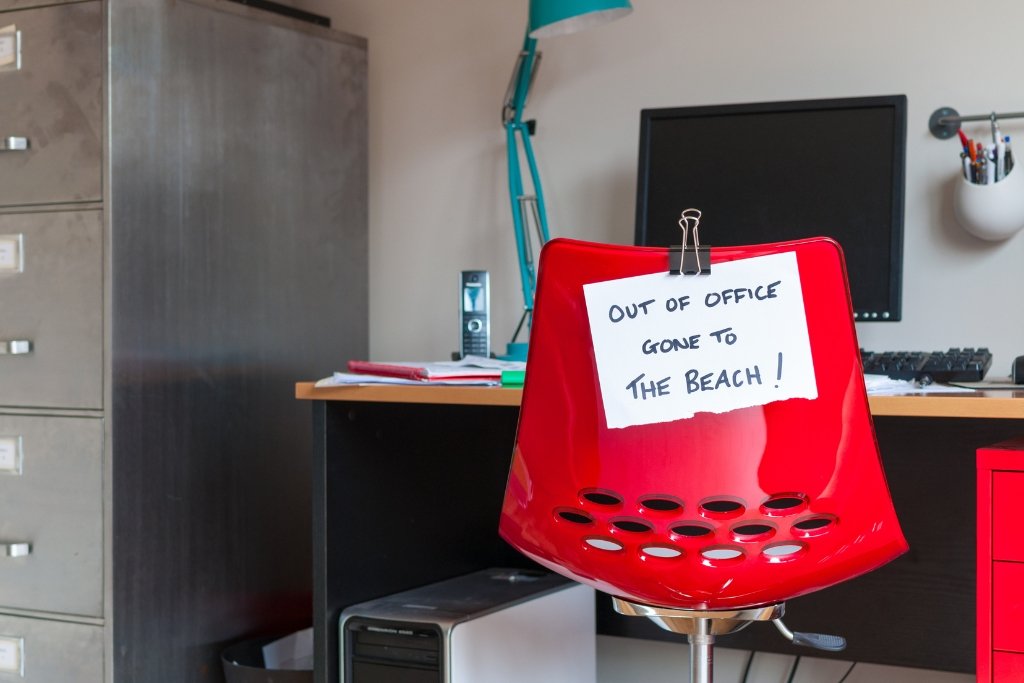
This one might seem like a surprise to include when you’re just starting a service-based business. But it’s really important! It’s all too easy in the early stages to overdo it.
It’s great to be passionate, and hard work is important to kick things off. But if you don’t schedule in time off, you risk burning out. And this is not going to help you gain any sort of momentum! So, when you take on your first clients and get into the swing of things, schedule in your first couple of days (or week) off in the near future.
Not only does this give you something to look forward to when things are hectic, but when it arrives, it will give you a much-needed chance to switch off. You can relax, recharge, get creative and come back ready to take on the world!
I talk more about this in my post discussing all the things I’ve learned running my own business.
Workplace/office setup

And finally, it’s worth considering your workplace/office setup from the early stages. While in many cases, a service-based business only requires a computer and an internet connection, working from home isn’t for everyone.
If you are working from home, don’t underestimate the benefit of having a dedicated workspace – either a desk in a spare bedroom or an actual office space if possible. The ability to separate work and home can be really important for your mental health.
Or, if you find that working from home feels claustrophobic, consider working from a co-working space, or getting your own office. It is an expense, but for the sake of your mental and physical health, it may end up being worth it!
Again, I have a whole post weighing up the benefits of working from home versus an office space – you can check it out here. And if you are based in the Edinburgh area, you can learn more about my own coworking space here!
Keep Reading
To read more about this topic, have a look at these:
9 Small Business and Product Launch Ideas
A Checklist for Your Successful Marketing Campaign Launch
What’s Your Plan for the Next 6 Months? 11 Marketing Ideas for Small Businesses
Your Small Business Marketing Plan: What is it, Why Do You Need it & How Do You Get One?


