

Something that often comes up when people talk about starting their own business is the fear of being overwhelmed. Running your own business means being a jack of all trades in many ways. You have a lot to juggle, and that can be intimidating! So one of the best ways to streamline your work is to find helpful software that works for you. In this post, I’ll run through the small business tools I use to help me run my business.
Figuring out what you can automate and what apps and tools can help save you time and energy is a lifesaver! From productivity and planning to marketing, communications and inspiration – these tools can help you manage your business in the most efficient way possible.

One of the most important skills of the self-employed is finding how to harness your productivity. On a larger scale, this can include what time of day you work best or what environment suits you.
Some people prefer working completely alone at home, while the bustle of a cafe works better for others and some people like a mix of both. But part of being productive means knowing what you need to do and when you need to do it.
The following tools can make this a whole lot easier:
Productivity
OmniFocus – Task & project planning. Free 14-day trial, then $99.99 per year, or $4.99 per month for a web only subscription. Or you can buy the software outright starting at $74.99.
Described as having “tools to help tame the chaos”, this software is the ultimate task organiser. With the option to share items to OmniFocus from any app on your phone, it will help you keep on top of everything on your to-do list in one place. While managing present tasks, clever forecasting options in the app help “set your future self up for a win”!
Harvest Forecast – Capacity planning. Free 30-day trial, then $6.25 per person per month (discount when you pay annually, works out at $5 per month).
Managing a number of clients and projects at once means keeping on top of my own time and availability. When a new client asks when I’ll be available to get started on their project, Harvest Forecast has the answer.
It’s a clear, visual platform that allows you to keep your schedule under control. If you manage multiple projects or work across a busy team, this software is a no-brainer.
PaymoApp – Automatic time tracking. Free version available, 15-day free trial and subscriptions from $9.90 per user per month (discount when you pay annually, works out at $5.90 per month)
Did you know that studies show we waste on average 2.5 hours a day at work? Keeping track of where your time is going is an important way to streamline your business. Paymo allows you to easily track your time without having to remember to hit stop and start. Useful to keep track of all your billable hours and also handy for quotes, proposals and invoicing.
Note Taking
Granola – note taking – basic account for free, business account starts at $14 per person per month
Granola is an AI note taking tool that you can use for in person, phone and video call meetings. It has customisable templates, multi-language support and, when you choose a paid subscription, can intergrate with some of your other platforms like Slack and Notion. It transcribes your meetings as well as enhancing your notes, ensuring you don’t miss a thing. The perfect way to save time and reduce the stress of noting every important point down by hand!
Learn more about how to save time and automate your workflows.
Accounting
Freeagent – Invoicing and expenses. Starts at £19 excl. VAT per month (sole trader), with 50% off for your first 6 months. 30-day free trial available.
Freeagent easily halved the time I spent every month on invoicing and expenses. It’s well known that some of the most common issues business owners encounter are around accounting. This software helps you take control of your finances and admin.
It has the added benefit of helping take care of your self-assessment too, another time-consuming and potentially stressful task if you’re new to it!
Small Business Marketing Tools
Social Media and Content

Canva, Affinity Photo – Design. Prices below.
Canva is a well-known tool and it’s popular for a reason. With templates for anything you can think of, from Instagram stories and LinkedIn banners to business cards, it’s an amazing time saver. Create templates for each platform and then simply switch images and text. This will create a consistent look on all your accounts. Canva is free, with a pro version starting at £13 per month (with a 50% discount on your first 3 months at the time of writing, December 2025).
If you want to go further than Canva and create your own visuals and edit photos, have a look at Affinity Photo. Adjust colour, paint, create stunning layouts and retouch – become your own graphic designer! It’s worth exploring the offerings of both and finding what works best for you.
Affinity Photo is now owned by Canva, and is free to use, even without a Canva Pro account. A massive bonus!
SocialBee – Social Media Scheduling. 14-day free trial and then starts at $24 per month (savings when paying annually available).
SocialBee saves me so much time! It automatically posts for you based on your own customisable, channel-specific schedule. You simply define content categories like “promotional posts” or “blog posts” and fill them up with posts without manually having to schedule each one of them!
It’s easy to create a custom version of each post for specific channels and if you want them to be reposted automatically, simply define them as “evergreen” content.
Find out more about the best social media scheduling tools for small businesses.
Analytics and Reporting

Google Analytics – Website Analytics. Free.
The OG in website analytics, Google Analytics is a great way to track how your website is performing. It helps you identify areas that may require work, and shows you where your traffic is coming from. All great ways of making your site more efficient and maximising performance. This is one of the most popular small business tools.
Fathom Analytics – Website Analytics – $15 per month, or save when you pay annually ($150)
Fathom Analytics is a great alternative to Google Analytics (or use it alongside!). It’s super simple, you can set it up in minutes with a single line of code. With over a million websites using it, they’re an independently owned company helping you analyse your website data without compromising on privacy. The dashboard fills up in real time, giving you all the information you need.
Google Data Studio – Reporting/monitoring. Free.
Need to regularly create web performance reports? As far as small business tools go, Google Looker Studio is your best friend. This app helps collect your analytics and produces customisable, easy-to-read reports. You can create bar charts, line charts – edit to suit your needs. Even import your Facebook analytics into a Google sheet and you can create reports on that too!
Google Search Console – Google search optimisation. Free.
As stated by Google, Search Console helps “monitor, maintain, and troubleshoot your site’s presence in Google Search results”. This service can fix indexing problems, show where your site is linked elsewhere online and explore search traffic data. Using Search Console can help you really optimise your site’s performance in Google Search. And that’s where you want to be popping up!
Read on to find out why you should always track and analyse your marketing results.
Small Business SEO Tools
Serpstat – SEO. Some free features then pricing starts at $69 per month ($50 per month for annual billing).
If search engine optimisation isn’t your area of expertise, it can feel like a minefield. Finding small business tools to help with it makes a huge difference! I recommend Serpstat.
It’s great for keyword research, page audits, competitor research, search analytics and more. A huge weight off your shoulders, particularly if you’re a newbie!
Communications
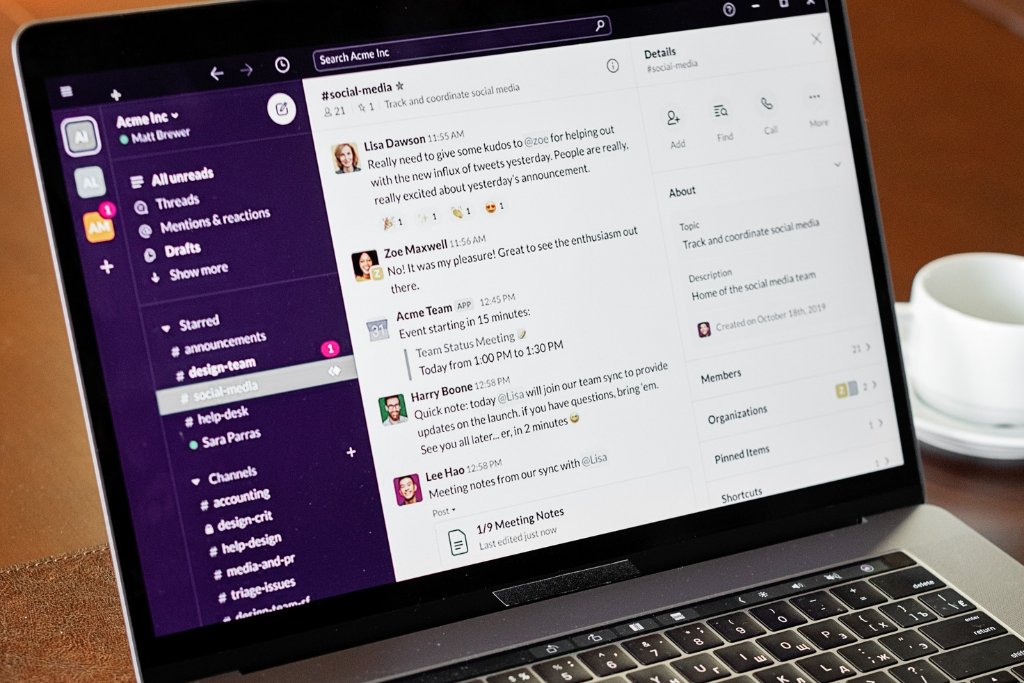
Slack – Communicating with a remote team. Starts at £7 per person per month. Free trial available.
Especially when communicating with several members of a remote team, email can get messy. From forgetting to hit CC to searching through endless threads, it can become a bit of a headache!
With Slack, you can message individual team members, or create chats with multiple people, keeping everyone in the loop. I find it really helps the whole team stay in touch much more productively! One of my favourite small business tools.
Trello – Collaborative projects. Free basic then starts at $6 per month.
Used by millions worldwide, Trello is a great collaborative project manager. Use project boards, lists and cards to organise projects across your team. It’s fantastic for highlighting pending tasks and due dates – it keeps everyone on the same page and up-to-date.
Zoom – Online meeting and conferencing. Basic Free account or starting at £13.99 per month for pro (up to 22% saving when billed annually).
Hosting a webinar or an online conference? Zoom is the platform for you. It is an easy way to organise online meetings and stay connected with your team, even when you can’t be in the same room. Zoom syncs with your calendar and can be accessed on any device, making life so much easier!
So there you have it – all of my favourite small business tools. I hope you’ve found some in there to help transform your work life – they’ve certainly made a massive difference for me!
AI Assistants
Notion – online workspace – free basic version or pro account starts at £10 per person per month (£8.50 per person per month when paid annually).
Of all the tools I’ve mentioned here, Notion is the most complex. Their tagline is “Notion is where your teams and AI agents capture knowledge, find answers, and automate projects.” – it’s a workspace where you can think, write, plan and manage your projects. From automating repetitive tasks to planning offsite meetings and turning meeting notes into social media content, the opportunities here are endless.
ChatGPT – AI assistant – basic access for free or pro starting at £20 a month
And last on my list we have ChatGPT. While it can be really useful for saving time and doing research, my advice is if you’re using ChatGPT, use it as a sort of digital intern, never as a replacement for experts in their field. If you’re in the early stages of your business, in particular, this sort of free help can of course be of real use.
KEEP READING:
To read more about this topic, have a look at these:
15 Things I’ve Learned Running My Own Small Business
Why You Should Work on Your Small Business – Not Just in it
How to Save Time and Automate Your Workflows
Make Your Small Business Work Smarter Not Harder


