

A content strategy is one of the most useful things you can put in place for your small business marketing. It gives you a clear plan for what to say, where to say it, and when – so your marketing becomes consistent, focused and a lot more manageable.
Instead of scrambling for ideas, posting ad-hoc, or going quiet for weeks because things got busy, a content strategy and plan give you a framework that keeps things moving. One that’s built around your business, your ideal clients and where they are in their journey.
The result? Marketing that works harder without taking over your life – and a steady flow of the right clients finding you for the right reasons.
Content doesn’t have to mean writing, by the way. If you’re more of a talker than a writer, a vlog or podcast might suit you better. If you’re more comfortable writing, a blog, newsletter or social captions could be your thing. Go with what feels natural.
Jump to:
Step 1: Start with your Brand Strategy
Step 2: Define your Content Pillars
Step 3: Plan your Monthly Topics
Step 4: Choose your Content Channels and Know their Role
Step 5: Plan your Content Categories
Putting it all Together – From Monthly Topic to Content Plan
Step 6: Create your Editorial Calendar
Step 1: Start with your brand strategy

Your content strategy doesn’t exist in isolation – it’s built on the foundations of your overall brand strategy. Everything you create, share and publish should flow from what you’ve already defined there.
That means your niche (i.e. your ideal clients), USP (i.e. what makes you different from the competition) and positioning (i.e. what you want to be known for) are the foundation of your content strategy. They tell you what you stand for and who you’re talking to. Without that clarity, it’s hard to create content that feels consistent, targeted or distinctly yours.
If you haven’t worked through those yet, that’s where to start. You can find everything you need here: Small Business Brand Strategy: Stop Blending In and Start Standing Out.
Once you’ve worked through your brand strategy, you’ll have a clear picture of who your ideal client is – their needs, challenges, goals and what triggers them to start looking for help – as well as how you help them with that.
That’s the foundation your content strategy is built on. Because content that connects is content that meets your ideal client where they are. Not just when they’re ready to buy, but long before that, and long after.
Step 2: Define your content pillars
Content pillars are the two or three core themes that run through everything you create. Think of them as your soapboxes – the topics you always come back to, that reflect your approach, values and expertise. (I dive into this in more detail on my Substack: Your Soapbox is your Superpower.)
The key is finding the sweet spot between what you stand for and what your ideal client actually needs to hear. That’s where content stops feeling like broadcasting and starts feeling like a conversation.

Let’s get back to our personal trainer example from the brand strategy and messaging framework posts. They came to fitness later in life and started their business to help people tackle the same barriers they faced – showing that an active lifestyle is possible at any age.
Here’s what their content pillars could look like:
Content Pillar 1: Fitness is for everyone
Making movement accessible: Practical, reassuring content that removes the fear and intimidation around getting started – showing that movement is possible regardless of age, fitness level or past experience.Content Pillar 2: Building habits that stick
Content about consistency, progress and sustainable routines – small wins, realistic goals and fitting movement into real life rather than building life around fitness.Content Pillar 3: Real life, real progress
Personal stories and honest conversations about what getting active actually looks like – human, relatable and free of gym culture pressure.
Step 3: Plan your monthly topics

Your content pillars give you the themes. However, you still need to decide how to turn them into content and when. That’s where monthly topics come in.
A good monthly topic sits at the intersection of your pillar and what you know about your ideal client. That means thinking about what’s going on for them at different times of the year. Consider their busy seasons, their planning periods, and the moments when certain challenges or decisions tend to surface. This helps you choose topics that are relevant and timely.
It also means being deliberate about who you’re talking to. Not every piece of content should target someone who’s ready to buy. Some topics should speak to people who are just starting to experience small challenges that will eventually trigger them to look for a solution. That balance is what makes a good content strategy work.
This is where your understanding of your ideal client’s customer journey comes in. The more you know about what they’re experiencing at different stages, the better placed you are to choose topics that land at exactly the right moment.

Let’s continue with our personal trainer example. Here is what six months of planned monthly topics might look like for them:
January: Starting over – how to get moving again without the pressure
Pillar 1 – taps into the New Year mindset without the toxic “new year, new you” angle. Targets people at the very start of their journey who are curious but not yet committed.February: Why consistency beats intensity every time
Pillar 2 – follows naturally from January. Speaks to people who’ve just started and need reassurance that small, regular effort is enough.March: What getting started actually looks like – a client story
Pillar 3 – by March, New Year motivation typically dips. A real story builds trust and reconnects people with why they started, helping to retain early-stage followers.April: How to fit movement into a busy life without overhauling your routine
Pillar 2 – spring is when people start getting busier. This topic meets them where they are and speaks to both beginners and people who’ve been following for a while.May: Why I became a personal trainer later in life
Pillar 3 – a personal story that reinforces the USP and builds deeper connection with people who are getting to know the PT and considering whether they’re the right fit.June: The fitness myths putting beginners off – debunked
Pillar 1 – summer is approaching and people start thinking about being more active. This topic removes barriers for people who are just starting to consider getting help.

Step 4: Choose your content channels and know their role
You may already have your channels in place – and if so, this is a good moment to sense-check that they’re working as hard as they could be. If you’re starting from scratch, choosing the right channels comes down to two things: where your ideal clients actually spend their time, and where your own strengths lie.
There’s no point building a YouTube channel if you hate being on camera. Or starting a podcast if writing comes more naturally to you than talking. The best channel is the one you’ll actually enjoy using – and that means it needs to suit both you and your audience.
When it comes to planning your marketing, it helps to think of each channel as having a specific job in your sales funnel – the stages being Discovery, Nurture, Credibility and Conversion. Not every channel is equally good at every stage – and trying to do everything everywhere is one of the fastest routes to burnout.
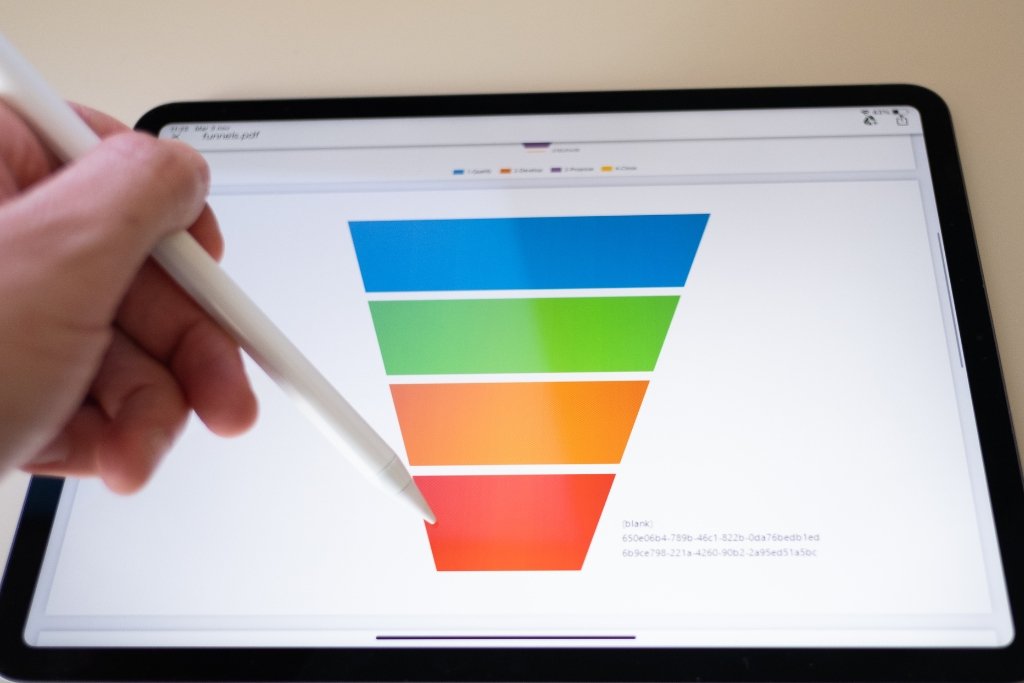
In general, your channels will map onto the four sales funnel stages like this:
Discovery – getting in front of people who don’t know you yet.
Nurture – building familiarity and trust with people who’ve found you.
Credibility – demonstrating expertise with people who are considering you.
Conversion – moving warm, engaged followers towards a decision.
The channels you choose, and how you use them, should reflect where your ideal clients are most likely to find you at each of these stages. This is all vital in creating a content strategy that works.
For example, with online search and AI answering people’s questions right then and there without sending traffic to your website, chances are that people discover you mostly on your social media channels. If you have a newsletter or another subscription model like a YouTube channel or podcast, that’s where you capture people and nurture them to become loyal followers. And when they’re ready to buy, your website gives them everything they need to know – and you the credibility to convert them into paying customers: From prices to your expertise and qualifications to detailed information about your approach and process, and testimonials from happy clients.
Going back to our personal trainer, they have three content channels – Instagram, YouTube and their website. Here’s how each one maps onto the sales funnel:
Instagram – Discovery
Most people finding the PT on Instagram won’t know who they are yet. The focus here is on engaging, fun and relatable content that gets them noticed and builds familiarity.YouTube – Nurture and credibility
People who find their way to YouTube are usually looking for something specific. In-depth, educational content builds trust and demonstrates expertise over time.Website – Credibility and conversion
This is where people go when they’re actively considering working with the PT. Detailed information about their approach, how they work, what’s included, rates, testimonials and case studies – everything someone needs to feel confident enough to get in touch or book.
Step 5: Plan your content categories

Once you know your channels, you need to think about what kind of content you’re creating. There are four content categories, each serving a different purpose, and all are key to your content strategy.
Fun – builds personality and reach; the content people share and remember you by.
Engaging – sparks conversation and connection; invites your audience in.
Educational – builds credibility and trust by sharing your expertise.
Promotional – converts interest into action; used sparingly and with purpose.
Each category tends to do its best work at a particular stage of the sales funnel. Fun and engaging content is most powerful at the discovery stage – it gets you noticed and remembered. Educational content does the heavy lifting in the nurture and credibility stages – it builds trust over time. And promotional content works best at the conversion stage, when your audience is warm and already familiar with what you do.
That’s why it matters which category you lean on most on each channel – because each channel has a different job in your sales funnel.
For a deeper dive into each one, check out my content categories overview post.
Let’s go back to our PT example to see how this works in practice.
Channels and content categories

Instagram – Discovery – Fun & Engaging.
The main focus is fun and engaging content that gets the PT noticed by people who don’t know them yet. Educational content works here too, but kept short and visual. Promotional content is used sparingly so it doesn’t overshadow the discovery focus and mostly tries to get people to sign up for the YouTube channel and newsletter.YouTube – Nurture and credibility – Educational.
The main focus here is educational content – in-depth videos that build trust and demonstrate expertise over time. Fun content has a supporting role, keeping the channel from feeling too serious. Promotional content is light-touch – a brief end-of-video mention of the newsletter or pinned link to the website.Website – Credibility and conversion – Promotional.
The focus here is on giving people everything they need to make a decision – how the PT works, what to expect, testimonials, case studies and a clear, simple way to get in touch or book. Content is less about frequency and more about depth and clarity.
This doesn’t mean you can’t share promotional posts on social media or that you’re limited to only educational stuff on YouTube. It’s more about thinking about where in your sales funnel people are on each channel and what content to mainly focus on.
And the type of promotional content depends on the channel, too: It’s about moving them along to the next step whenever they’re ready – encouraging social media followers to subscribe to your YouTube channel and sending people who are ready to look into getting help to your website.
Putting it all together
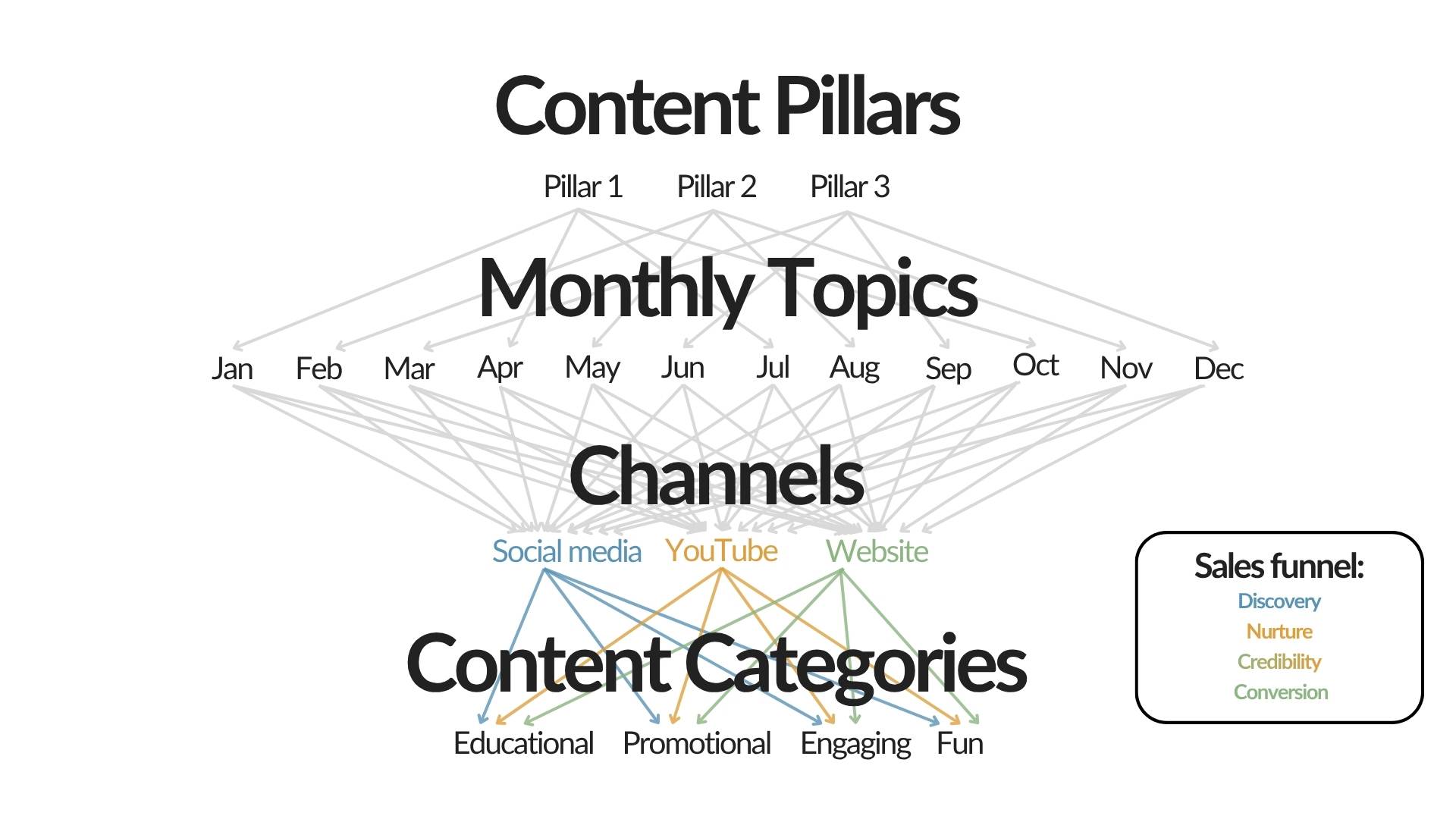
To see how this all works in practice, we’ll go back to our PT. Let’s look at how they plan out one monthly topic across Instagram, YouTube and their website:
Content Pillar 2: Building habits that stick
Monthly topic: April – How to fit movement into a busy life without overhauling your routine
Instagram – Discovery
A series of short, relatable posts that meet people where they are: A question post asking followers what gets in the way of exercise. A fun reel of “movement windows” people don’t realise they already have. A soft call to action for people who recognise themselves in the content.YouTube – Nurture and credibility
An in-depth video walking through a realistic week of movement for a busy beginner – no gym, no big time commitment. Practical, accessible and reassuring rather than intense.Website – Credibility and conversion
A case study or testimonial from a client who started in exactly this position – too busy, unsure where to start – and what changed for them. Backed up by clear information on how the PT works and how to get started.
Step 6: Create your editorial calendar
Once your strategy is in place, an editorial calendar turns your content strategy from a plan into a practice. It’s where everything comes together – your monthly topics, your channels, your content categories, your sales funnel – mapped out into a clear, manageable schedule.
Without it, even the best content strategy risks staying theoretical. With it, you always know what you’re creating, when it’s going out and which channel it’s for. It removes the guesswork and makes consistency realistic – even when things get busy.
At this stage, you don’t need to plan every detail. See your editorial calendar as a to-do list for your content creation. For longer content like a YouTube video or blog post, mapping out the topic is enough. For social media, you’re simply planning which content category goes out on which day and at what time — not what the post will actually say. The specifics come later, when you sit down to create.
For a practical guide to building your editorial calendar, check out this post: How to Create a Social Media Content Plan for Your Small Business. It focuses on social media, but the same approach applies to all your other content channels – just add them in.
Final thoughts
A content strategy isn’t something you build once and forget about. It’s a living document that should evolve as your business grows and as you learn more about what resonates with your ideal clients.
So if something isn’t working, change it. If a topic lands better than expected, do more of it. What you learn from your content – what gets shared, what drives enquiries, what sparks conversation – should feed back into your strategy and help you refine it over time.
Think of it as a loop rather than a straight line. The more consistently you show up, the more you’ll learn about what works – and the easier it gets.
KEEP READING
To read more about this topic, have a look at these:
Why Creating Engaging Content is Crucial for Your Business
4 Types of Social Media Content You Should Focus On
Small Business Brand: What Is It, Why Do I Need One & How Do I Get One?
Why Your Content Strategy Needs Both Evergreen & Topical Content


